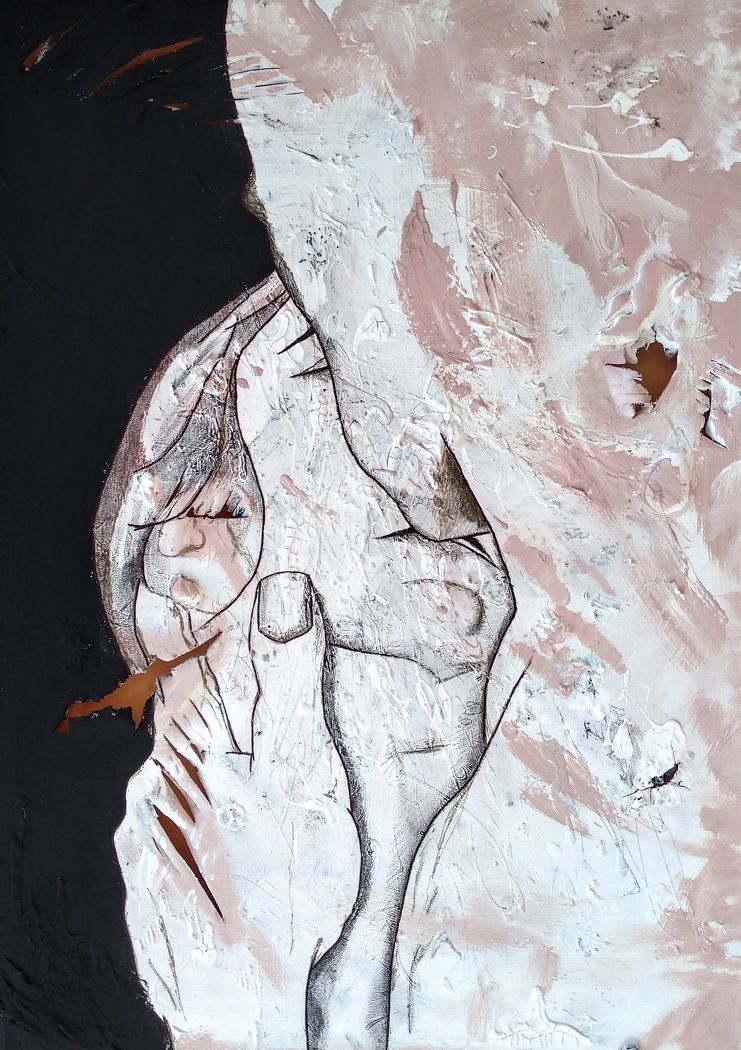
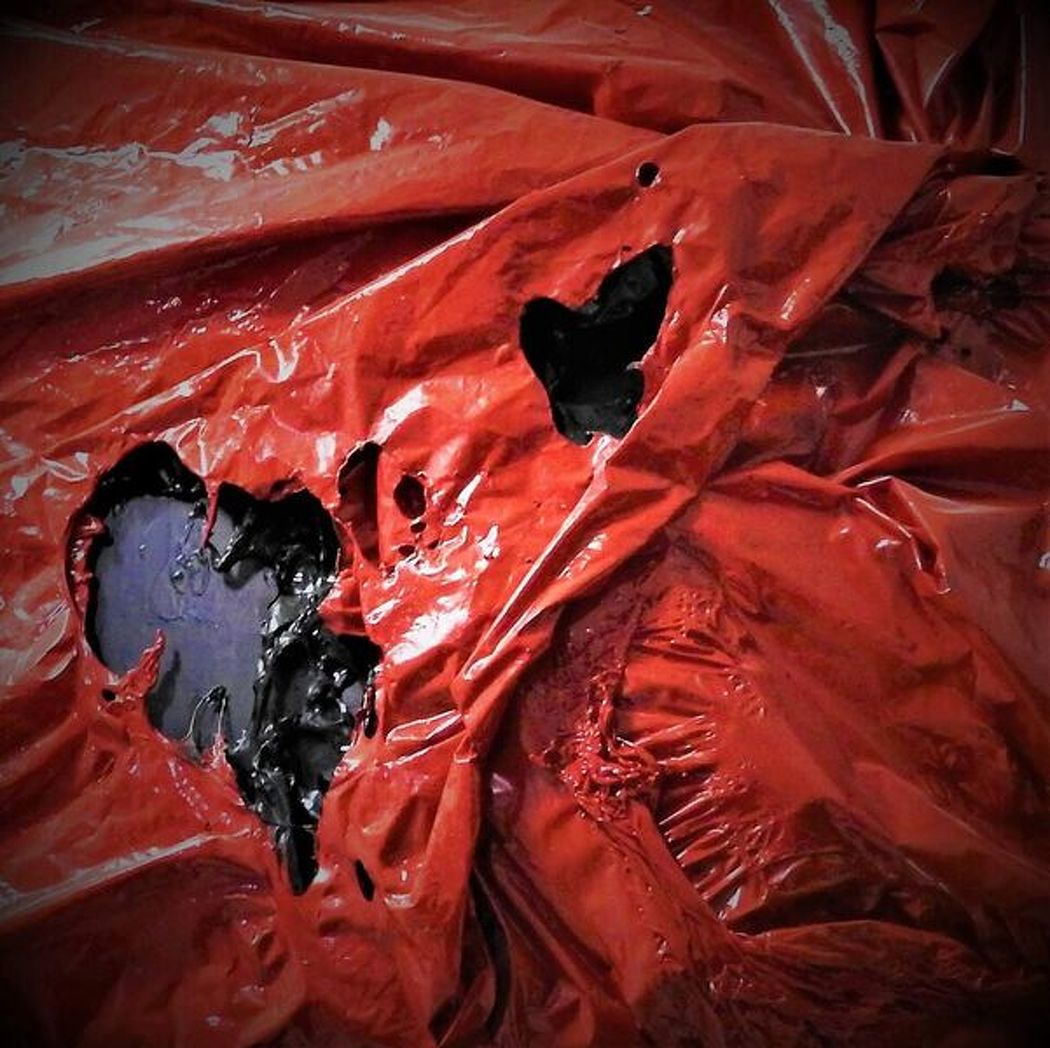
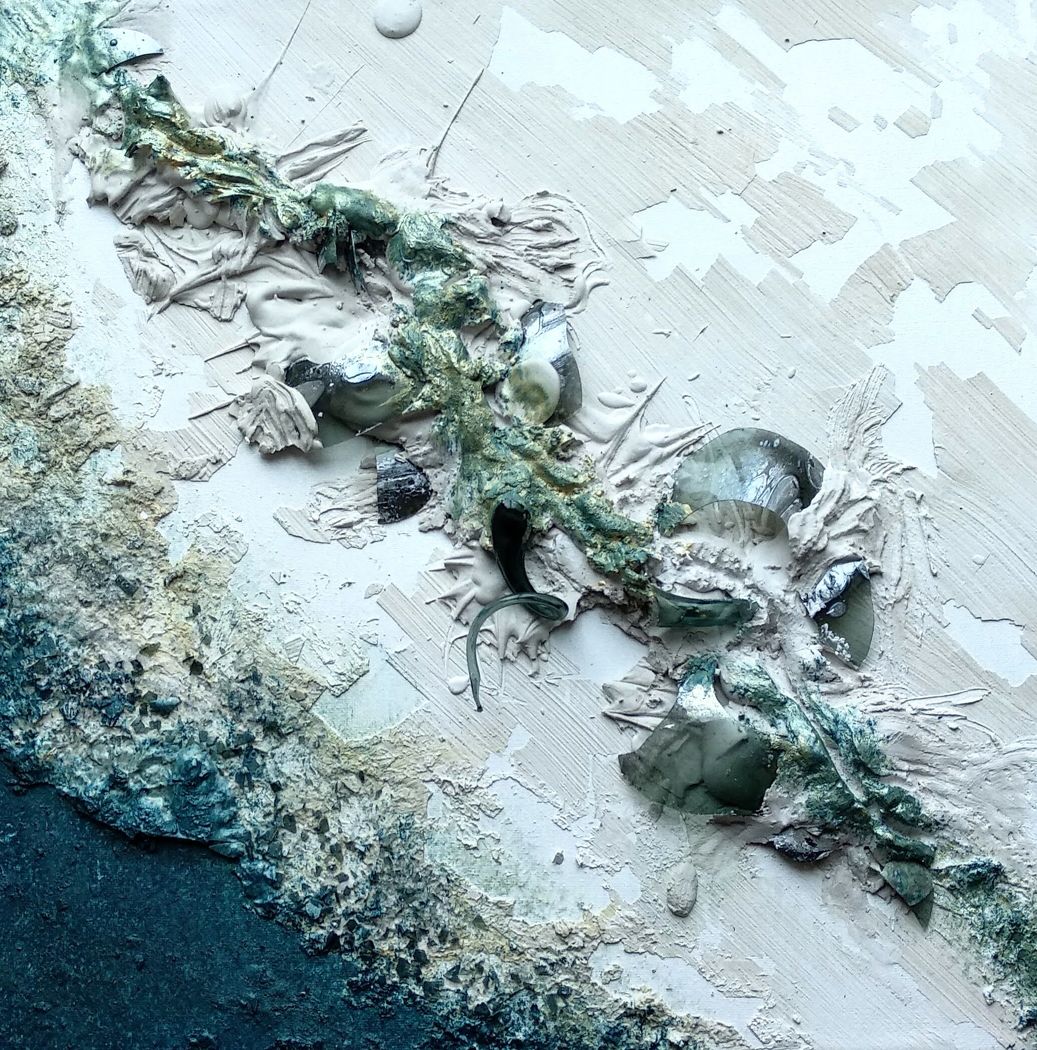
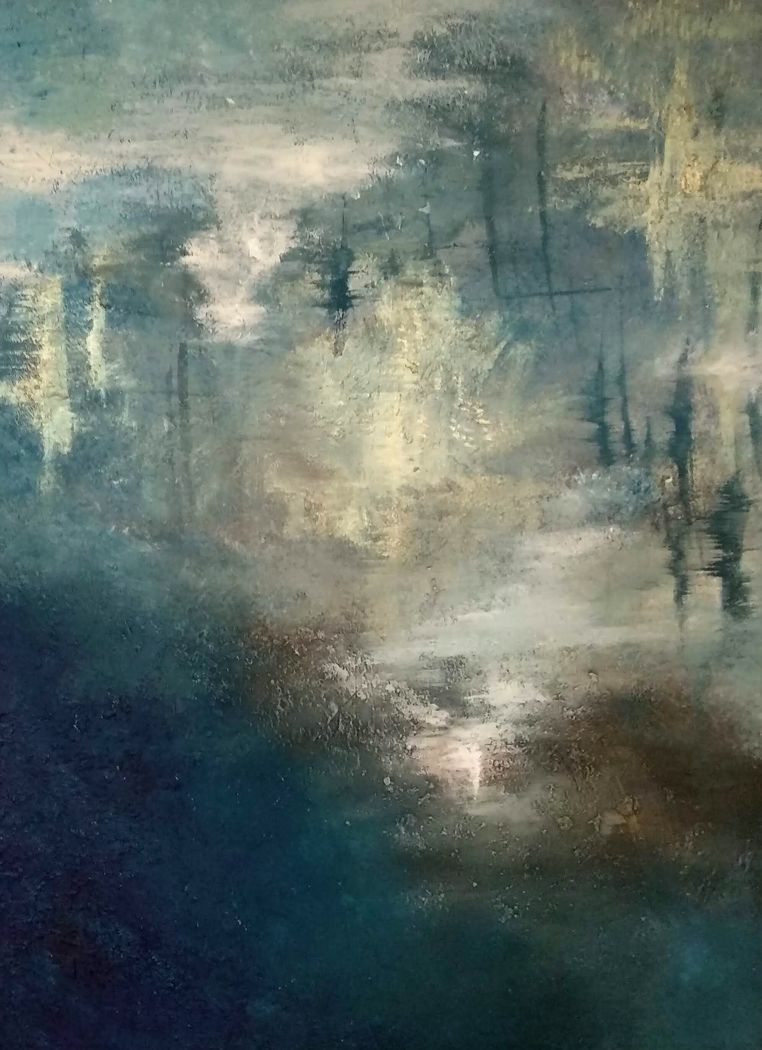
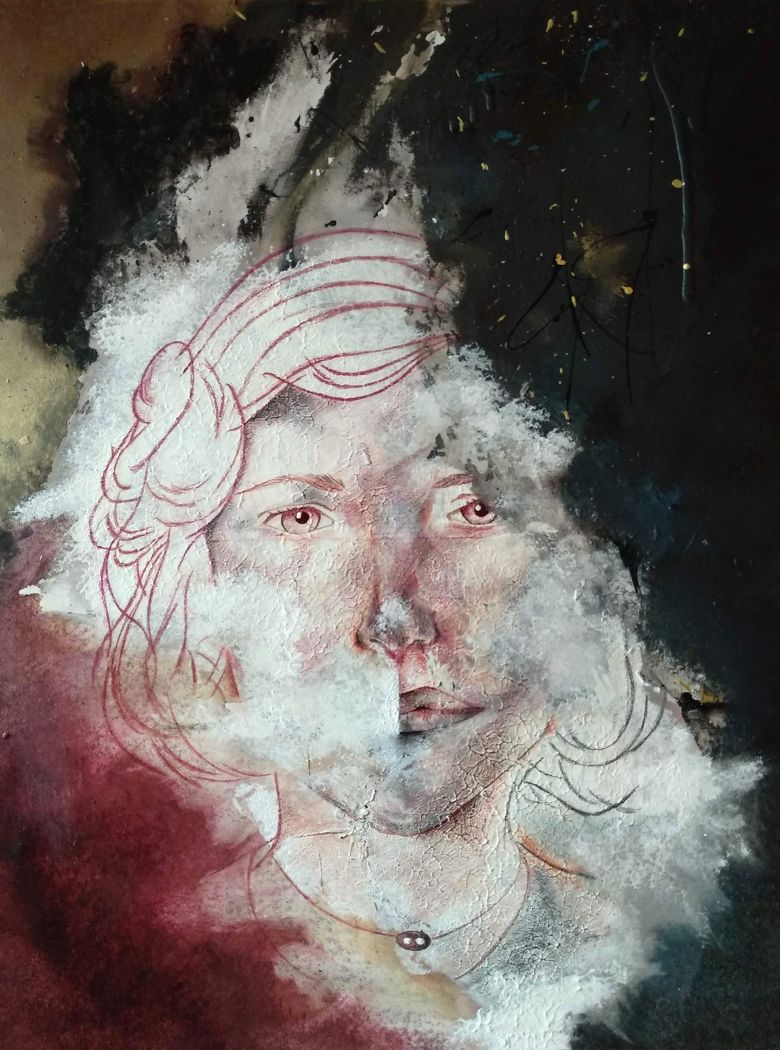
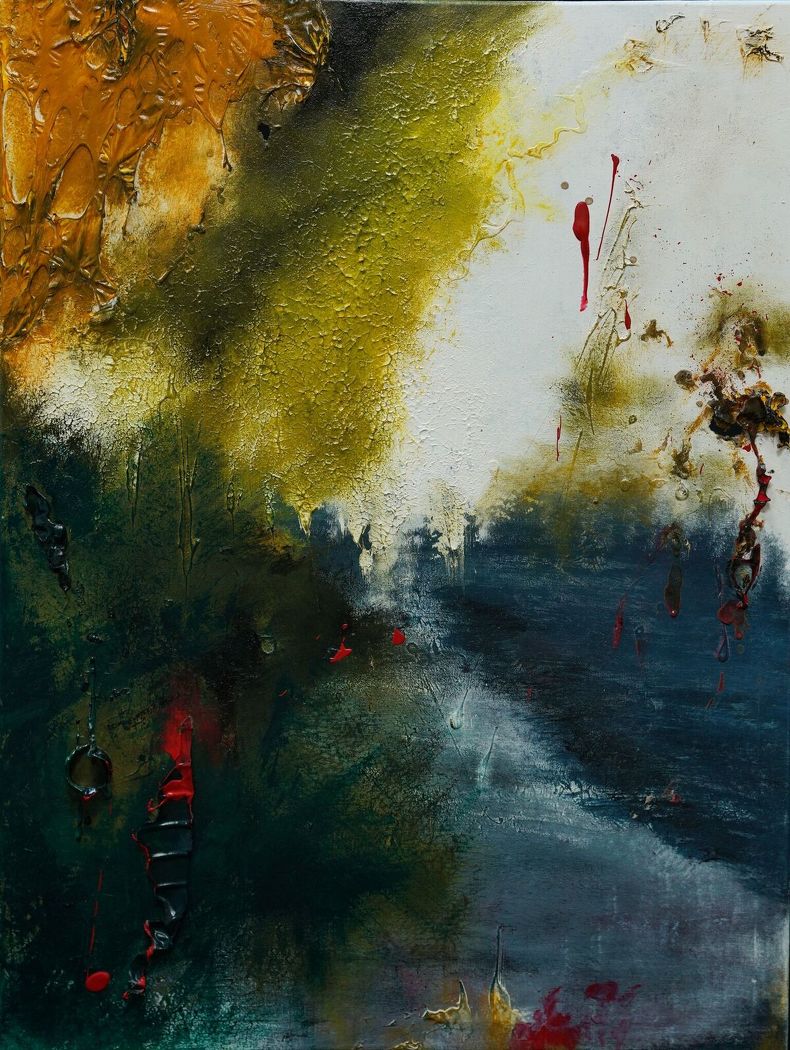
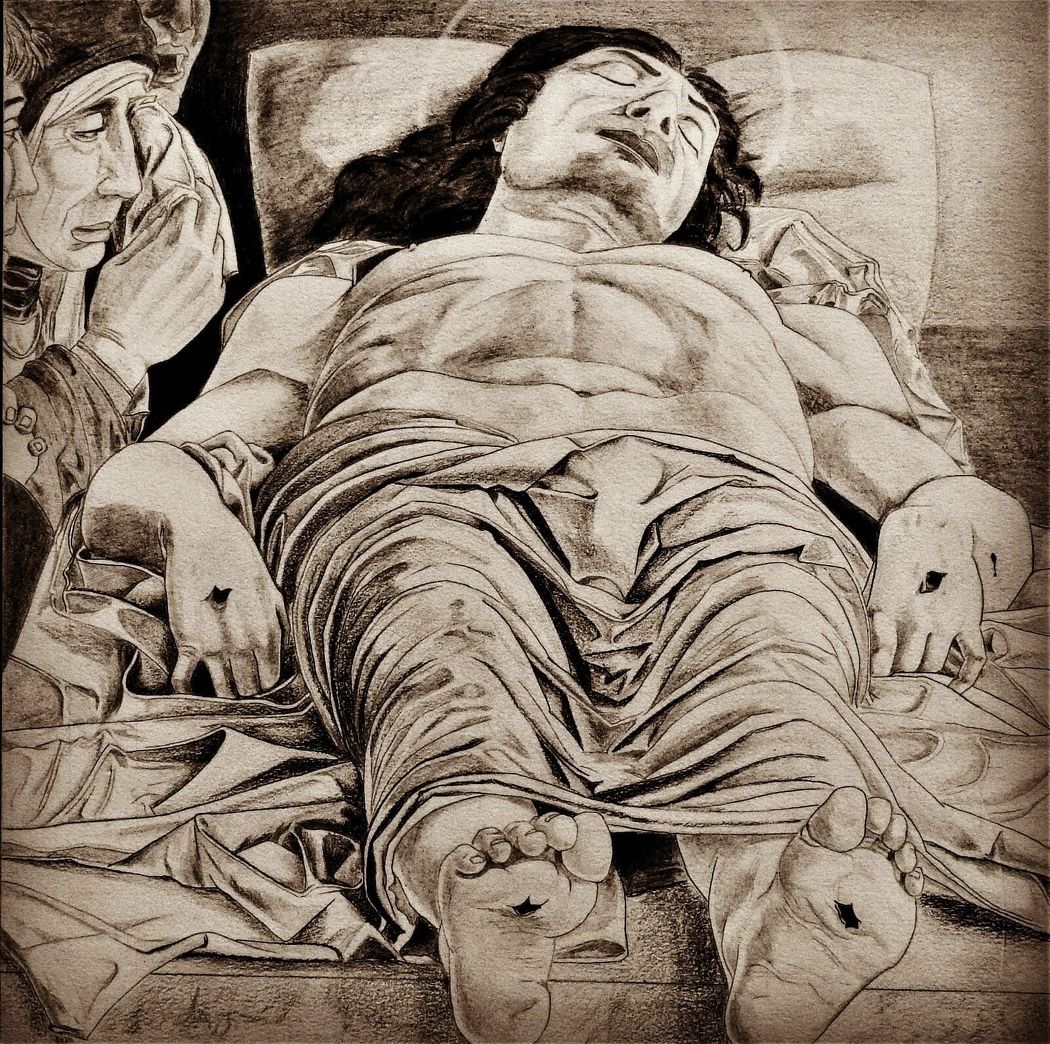
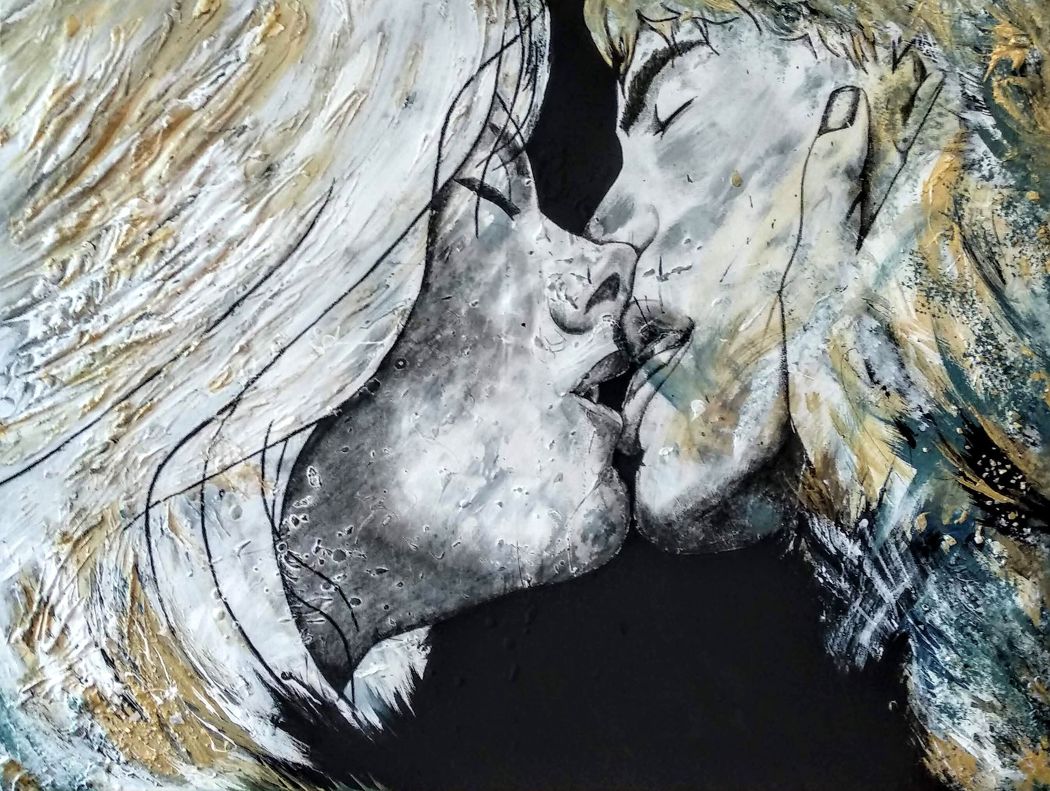
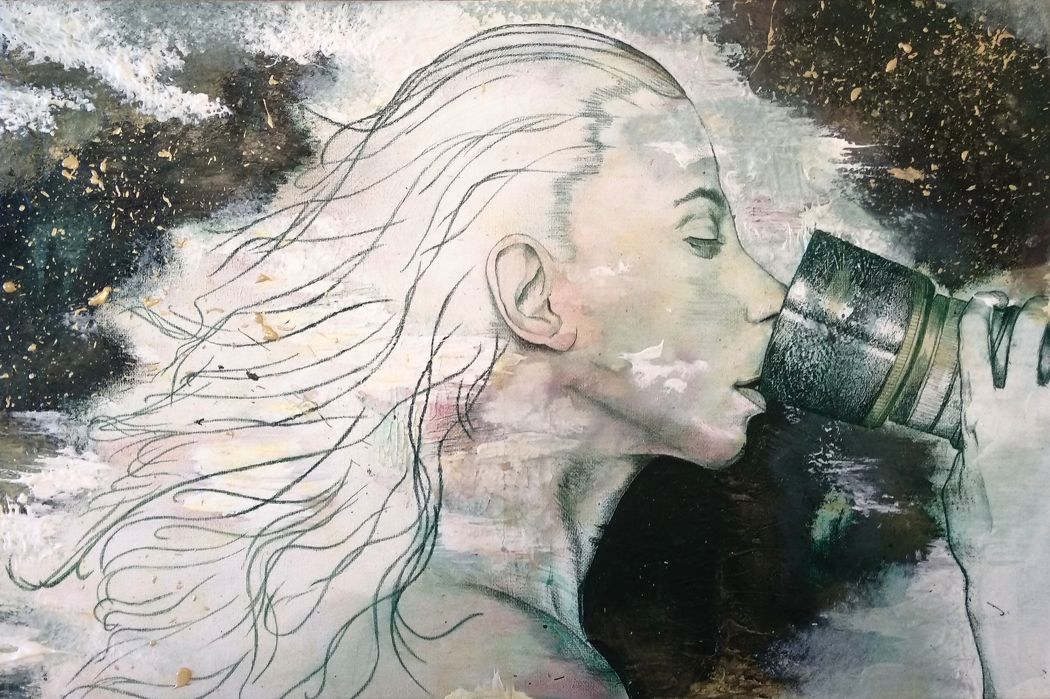
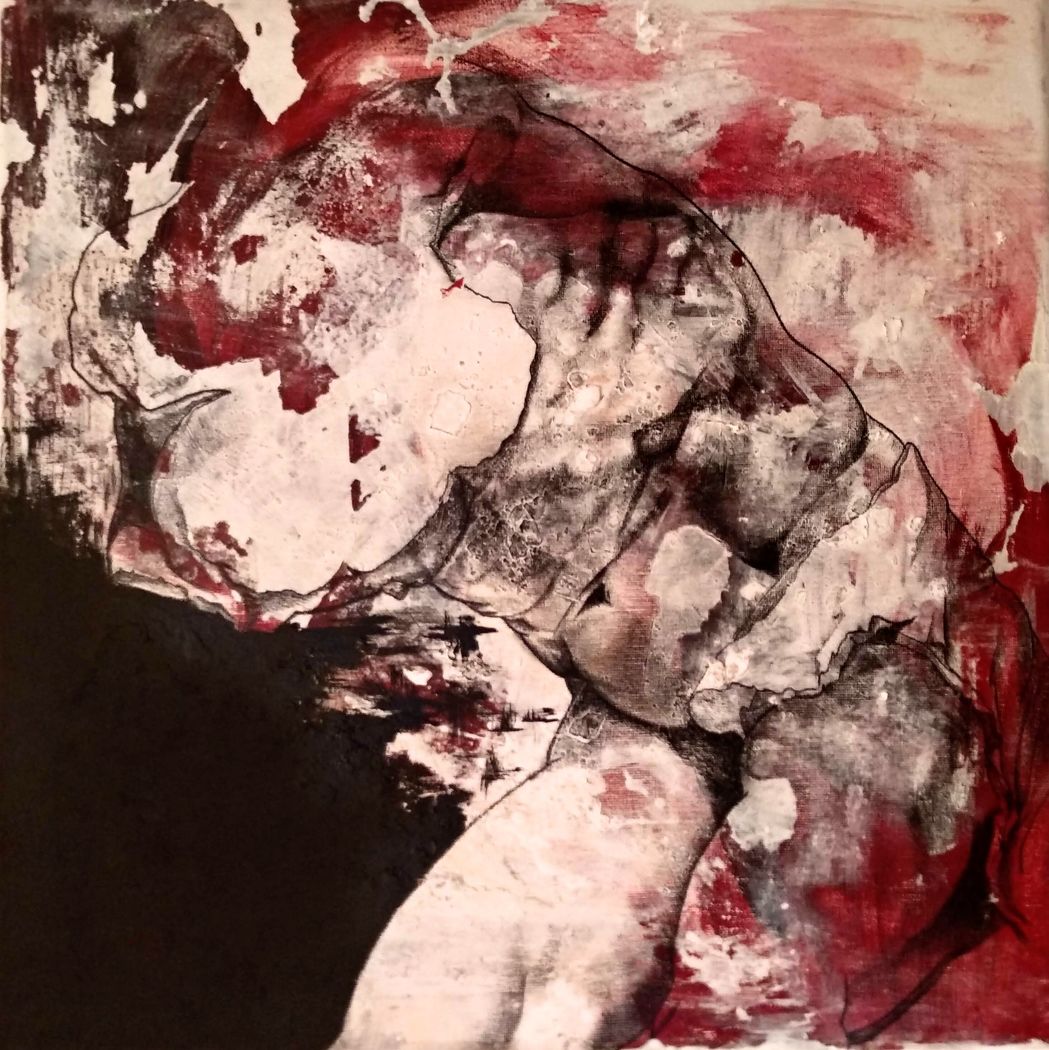
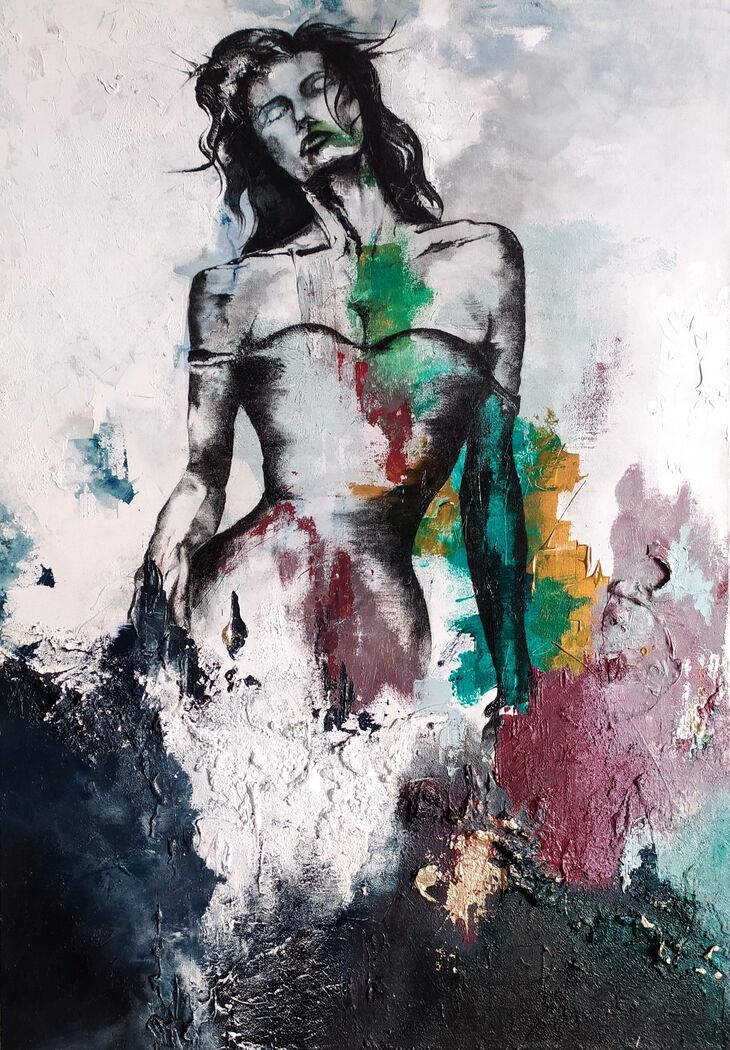
The artist was born as a dancer, and that for painting will become a passion consolidated much later, only starting in 2017. The need to explore new artistic horizons will lead him, within a couple of years, to cross the boundaries of dance and land in the universe of painting. His production began to get thicker, despite the limited time available to him from his first work, and his style began to take shape more and more clearly. In fact, the young man decides to abandon immediately what are the traditional techniques to embrace a hybrid and completely personal language, the result, we could say, of a mixture of completely different and antithetical styles; this synthesis leads him to the creation of simple and linear images, but at the same time with an immense emotional impact. The subjects, when we speak of figurative works, are always chosen with extreme selectivity by the author; his portraits of faces or naked bodies, immersed in a dark, empty space, which we could define as alienating, do not seem to exist in a given moment and space, but ripped from reality to be suspended in another dimension, created by pure ruminations on colour, form and matter. The subject becomes a sort of pretext, ceasing to be the central element of the work, which as we shall see later is instead given by colour, conceived by the author as a virgin material to be molded. In many of his paintings we find an explicit reference to the work of Alberto Burri, an Italian artist of the twentieth century who represented one of the greatest contributions to the international art scene after World War II. From Burri, he takes up that spasmodic artistic research that crosses the narrow confines of painting, transposing its aim towards the investigation of the expressive qualities of the material, but continuing to maintain an essentially pictorial character. The material of which the work of art is constituted plays a fundamental role that is not distinguishable from the image, as it is itself a carrier image of communication and meaning from the representative and expressive efficacy. Another characteristic that often returns in the works of the young Italian is undoubtedly one of the fundamental points of tangency that united the various and complex artistic facets that after the Second World War were ascribed to that large movement called Informal Art: "The surface of the painting appears as a single whole in which the figure and the background are not really distinguishable, the drawing, when it appears, does not present itself as the outline of a well-defined pattern, but as a structure of signs that innervates the surface of the painting, just as colour does not fill any form, but is freely opposed to other colours, making itself a design, a figure, or a surface, or all three things at once. [...] The surface looks like a field suitable for recording the painter's gestures, like an accumulation of brushstrokes, or an overlapping of coloured materials. " (G. C. Argan) In Calipari's works the color stands out on the canvas as writing, as accumulation, but it also becomes a framework, the backbone of the painting. Although his paintings are more comparable to the distinctive elements of 'Informal material and sign, we also find in some of them the technique of "drip painting", which also gives him some characteristic features of gestural informal, of which Pollock was undoubtedly the most emblematic exponent. And yet, unlike all the exponents of the Informal, within the figurative works of the young artist, the creative process never fails to affect, or even to touch, the appearance of what is portrayed: the love of form and for the proportion of the bodies it generates a strong contrast given by the superimposition of a decidedly abstract and material pictorial structure, to an almost pure mimesis which portrays his subjects unchanged, in an apotheosis of form and beauty. The two-dimensional nature of the subjects portrayed makes up for a three-dimensional, almost intrusive, all-encompassing use of color, conceived as a pure means to be shaped and sculpted on canvas. So it will be for plastic, stucco and glass, which through rises, gashes, combustions, rough layers, agglomerates and coarse backgrounds painting of colour, generate that intimate struggle that finally leads to a perfect synthesis of almost ostentatious harmony and balance. Matter becomes the unhinging element of a representation in which the figurative is only a means of expression, never the sole intention. Like a skilled demiurge the artist manipulates colour and extracts from his subjects a vital energy, but at the same time destructive: faces, bodies, looks, emotions are so estranged from their banality, to vibrate with an individualizing and visceral light. The colour thus becomes the pivot, the dominant element of his language, almost as if it were animated, autonomous material, capable of taking on its own life and contrasting all the remaining elements on the canvas, except for the same molding will of the painter, who controls its results. Hand and colour merge, becoming a whole that becomes an instrument, the first half: as the hand of a violinist dominates the bow, merging with it and generating wonderful harmonies on the strings, so the painter's hand blends with the colours, the plastic and any other material to create on the surface of the canvas or wood those harmonic syntheses of apparently random beauty and balance, but in reality given by an almost obsessive meticulousness. Calipari's painting proposes a suggestive chromatic union between abstract universe and figurative reality, a classicism reinterpreted in terms of the expressive force of contemporaneity, through an intense and unusual language that ranges from one technique to another with enormous freedom. Some critics have identified in the lacerations and wounds of the material the emblem of an unconscious suffering that the author would sublimate on the canvas through his own art, generating that profound structure of the material that characterizes his works.